
Design the Loop Before Launching /goal to Save Tokens and Improve Output
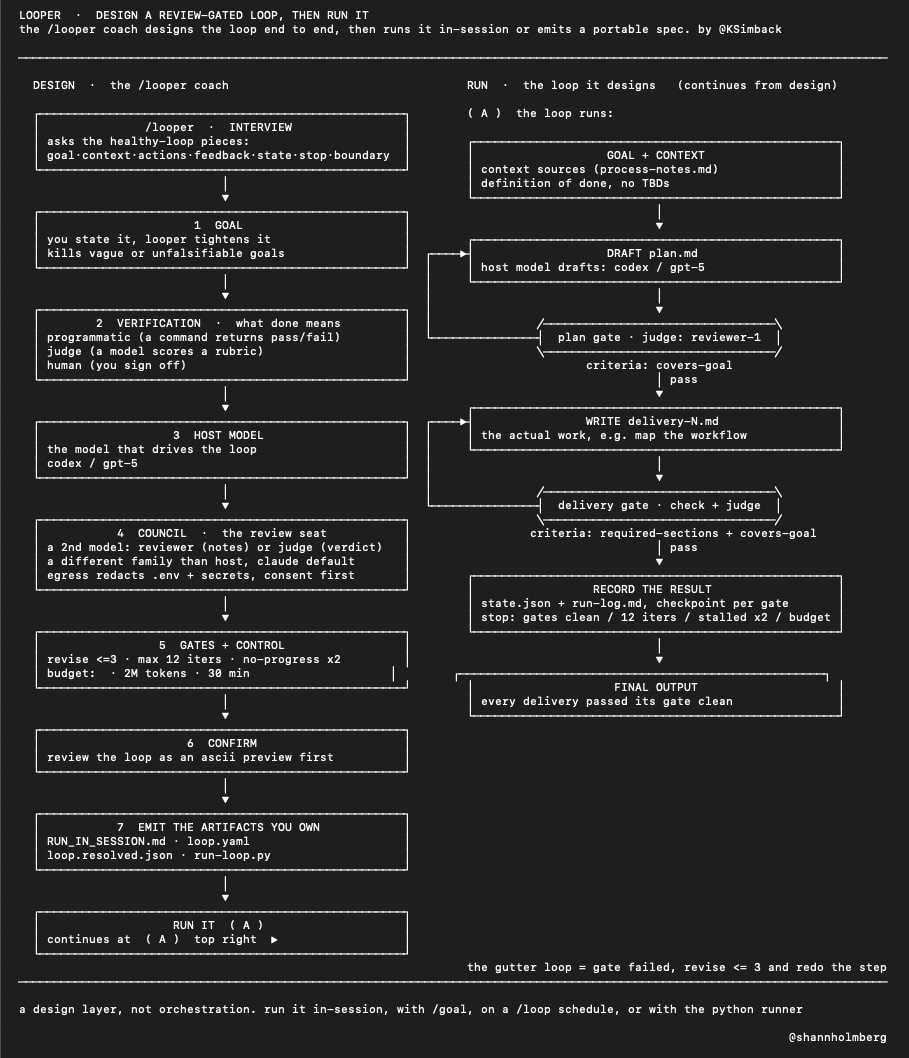
How to improve your /goal by designing the loop before launching it
A poorly designed loop quickly burns tokens and produces garbage. That’s why it’s important to spend time designing the loop harness.
Instead of just writing /goal and hoping it works, you first run it through the LOOPER skill, and it:
- critiques your loop and brings it in line with best practices from the library
- builds a verification rubric so the loop understands what “done” means
- lets you plug in an LLM as a judge, including Codex and models other than Claude
- sets limits and a token budget — strict or flexible — so the process doesn’t go off the rails
- exports everything as a portable artifact you can rerun and edit
- provides a visual diagram of the loop
This is a design layer that helps assemble a loop that produces a high-quality result, and then hands it off to Claude Code or other models