Anthropic: 2 Ways to Use Fable 5 with Sonnet 5 to Cut Costs
Anthropic shares two common setups: Fable 5 as Advisor or Orchestrator with Sonnet 5 executors—near-top quality at much lower cost.
Anthropic revealed several of its use cases: which are often used with Fable 5
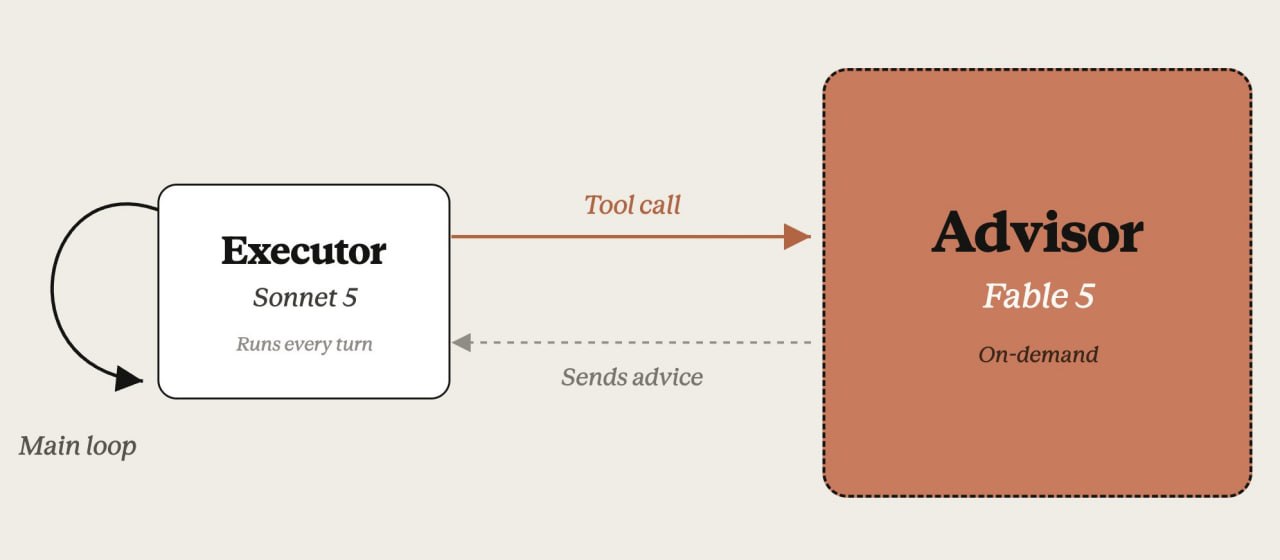
1. Use Fable 5 as an “advisor” (Advisor)
In this scenario, Sonnet 5 acts as the executor and turns to Fable 5 for recommendations.
Most tokens are billed at the executor’s lower rate.
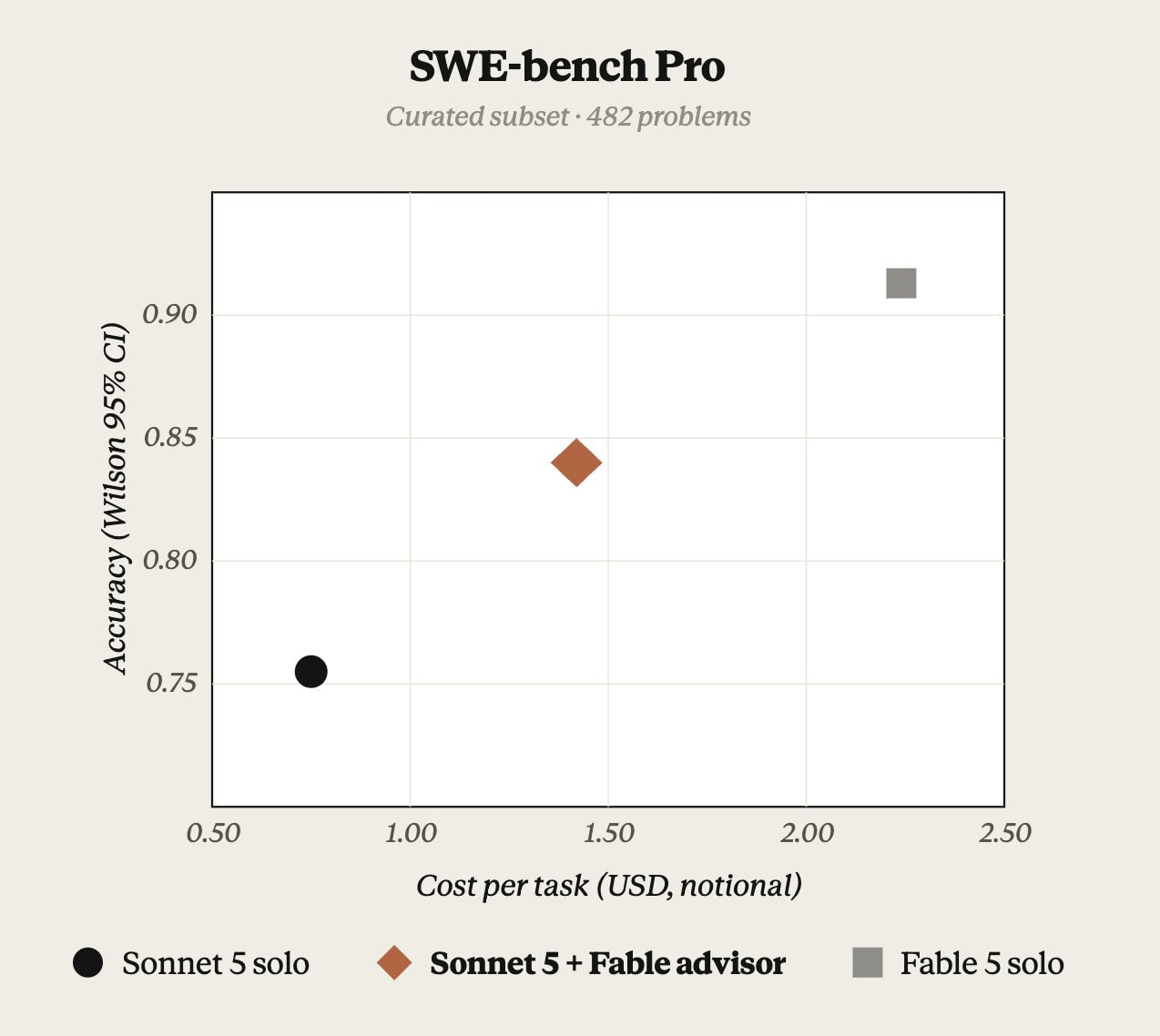
On the SWE-bench Pro benchmark, the Sonnet 5 + Fable 5 (as Advisor) setup achieves about 92% of Fable 5’s quality, while the cost is roughly 63% of the cost of using Fable 5 alone.
With this approach, Fable 5 is called infrequently (about once per task) to define the strategy, and Sonnet 5 does most of the work.
More details in the documentation.
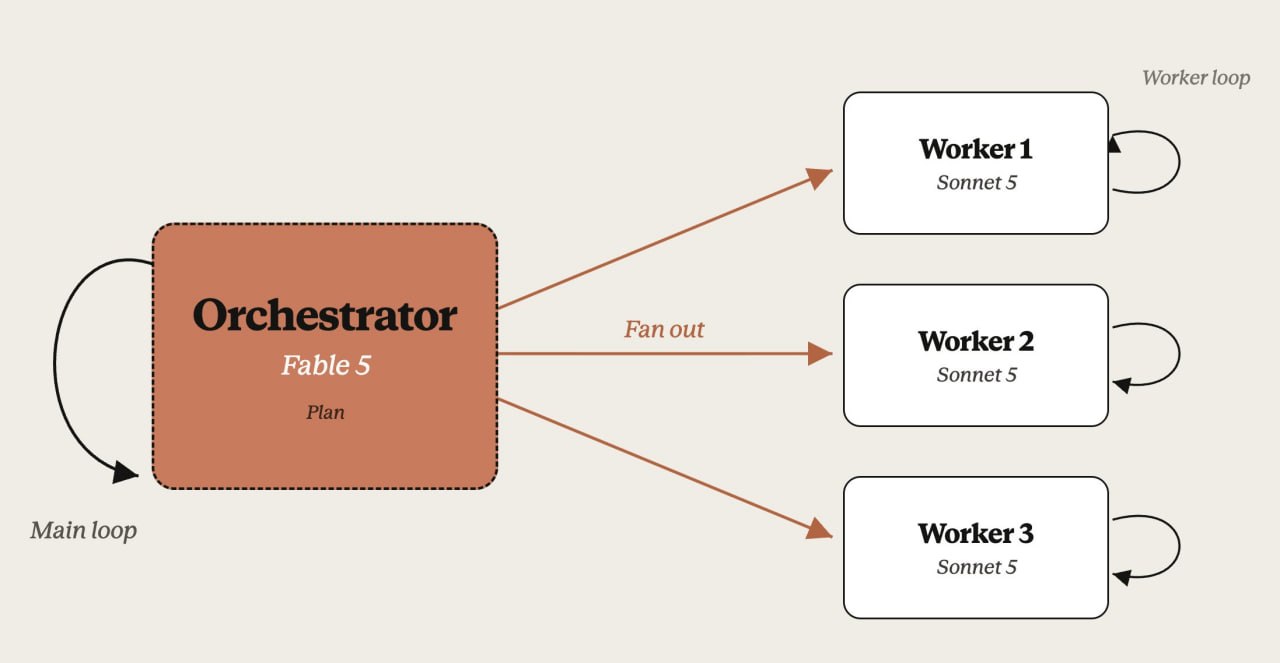
2. The second approach is to use Fable 5 as an orchestrator
In this case, Fable 5 plans the task execution and distributes it among executors (Sonnet 5).
Most tokens are billed at the executors’ lower rate.
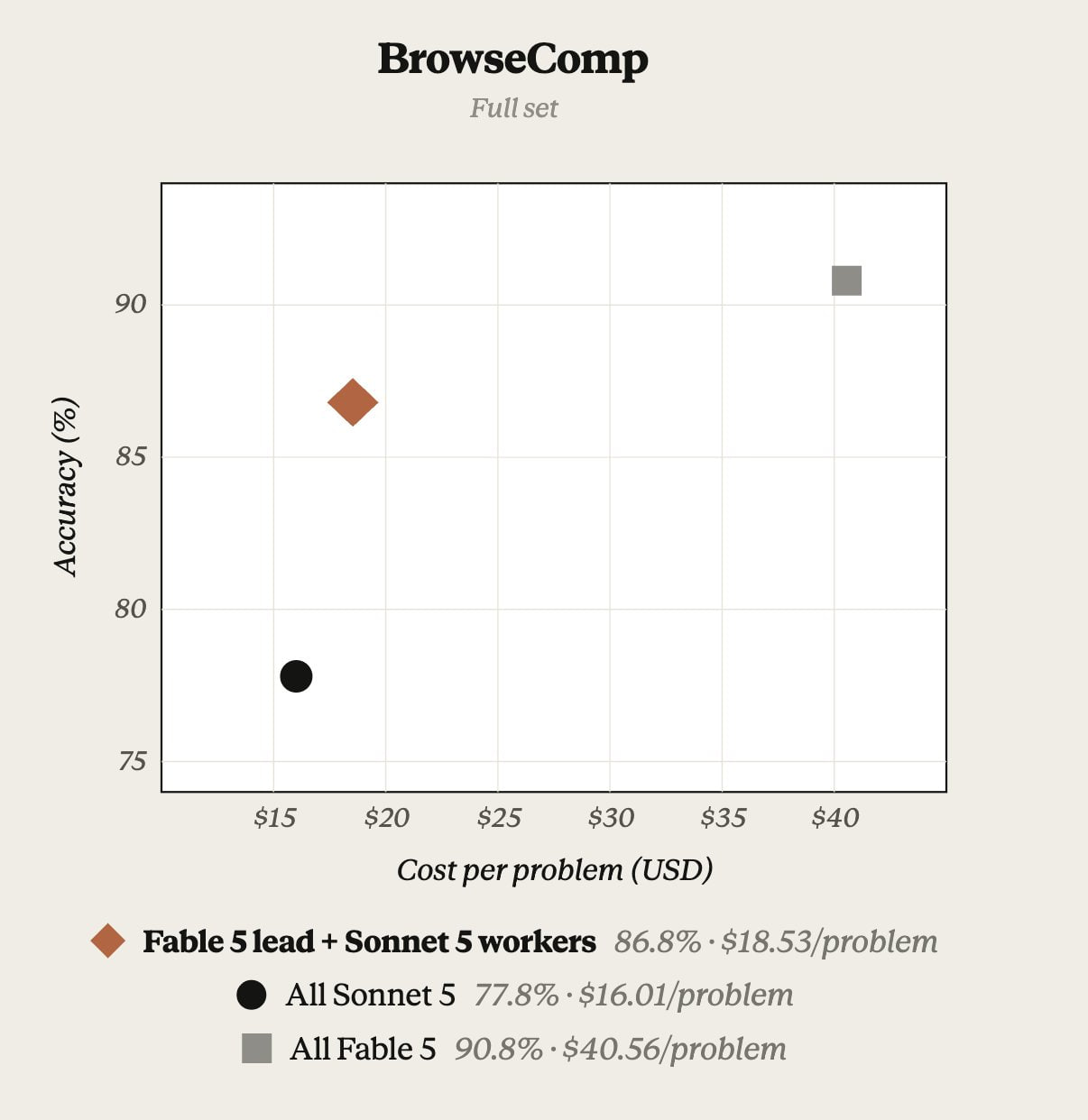
In BrowseComp tests, Claude Managed Agents were used with Fable 5 as the orchestrator and Sonnet 5 sub-agents as executors. This configuration delivers 96% of Fable 5’s performance at 46% of its cost.
Resource-intensive research tasks are handed off to Sonnet 5.
P.S. Claude Managed Agents supports both approaches
With sub-agents you can:
- pass complex tasks up to the Fable 5 level in the Advisor role;
- delegate task execution to Sonnet 5 executors.
Each sub-agent uses its own cache, so on repeated calls you don’t have to pay again for processing the same context in full.

Comments
Weekly digest
The best of vibe coding, AI agents and open source — once a week, no spam.
Related articles
All articlesAnthropic Export Restrictions Lifted: Fable 5 Access Restored
Anthropic says U.S. export restrictions are lifted, restoring Fable 5 access. New cybersecurity classifiers, Opus 4.8 delegation, and a jailbreak framework follow.
Claude Sonnet 5 Released: New Default Model, Lower Prices and Limits
Claude Sonnet 5 is now the default for Free and Pro. Quality near Opus 4.8, cheaper pricing through summer, but usage limits were lowered.
Anthropic Temporarily Boosts Weekly Limits by 50% Until July 13
Anthropic is running a limited-time promotion with a 50% increase in weekly usage limits. The offer is live now and ends July 13.